

Li & Fung joins forces with Softwear Automation

German initiative proves regional textile chains can be economically viable.
14th January 2026
Knitting Industry
|
Dietenheim, Baden-Württemberg, Germany
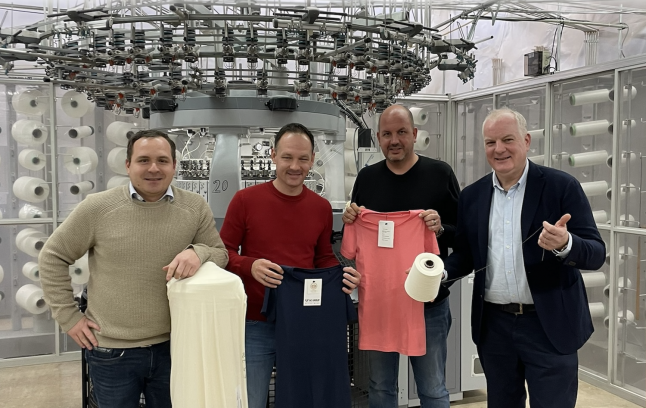
A German textile project is challenging the long-held assumption that global supply chains are always more cost-efficient. Under the name Lokalstoffmacher, or Local Fabric Makers, three companies have established a fully regional knitwear value chain that demonstrates how local production can be economically feasible when price, value creation and return are considered together.
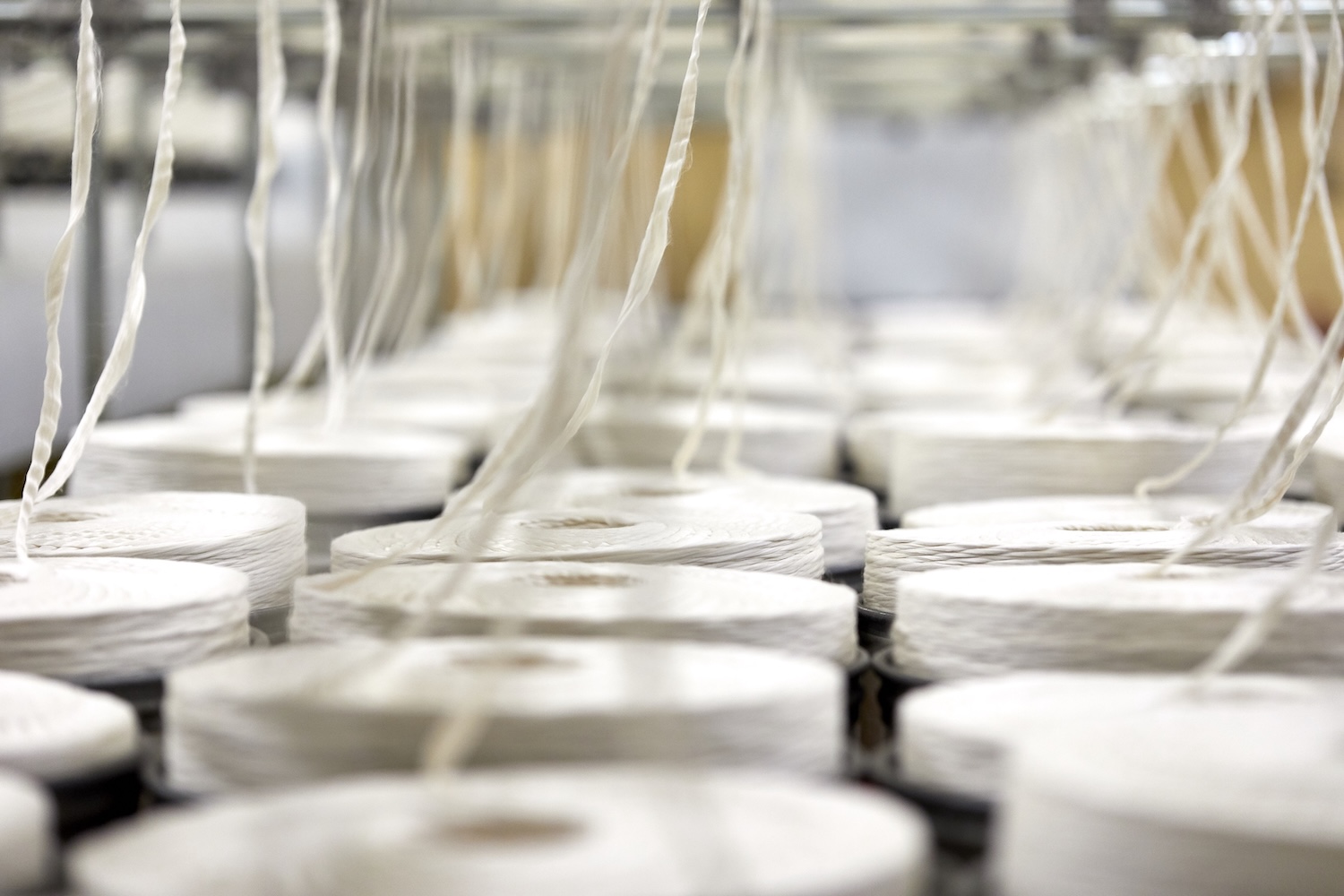
The initiative brings together fibre sourcing, spinning, knitting and finishing within a closely coordinated regional framework. Cotton fibre sourced from Spain is spun at Gebrüder Otto, with knitted fabrics produced by Edelweiss Jersey and final finishing carried out by Textilveredlung Keller. Each stage is clearly defined, geographically close and fully traceable, resulting in a certified, market-ready textile solution.
The project was initiated in 2025 by Patrick Herter, managing director of Edelweiss Jersey, with the aim of creating a stable and resilient cooperation model between specialised partners. According to Sebastian Keller, co-managing director of Textilveredlung Keller, transparency across every production stage is essential, as each partner contributes a vital part of the overall value creation. His co-managing director Christian Weiss adds that the ultimate objective is to generate reliable, value-creating orders.
Andreas Merkel, managing director of Gebr. Otto, sees clear market potential for the knitted fabrics developed through the initiative. Regular coordination meetings between the partners allow for close alignment and agile collaboration, supported by their geographical proximity. This, he notes, is a decisive advantage in an increasingly complex textile market.
Merkel points to the growing relevance of so-called domestic luxuries, a term describing consumer preference for locally produced goods. In premium and upper-mid apparel segments in particular, regional origin, transparency and authenticity are increasingly valued and rewarded by customers.
From an economic perspective, the partners stress that the project is still in an early phase. However, one immediate benefit has been stronger integration across the value chain. The cooperation has enabled direct interaction between spinning, knitting and finishing partners, removing intermediaries and improving mutual understanding.
Beyond the private market, the initiative also identifies public procurement as a key opportunity. Merkel argues that current tender processes often focus narrowly on unit price, overlooking the broader economic returns of domestic production, such as tax contributions, employment and social security payments. When these factors are taken into account, locally produced textiles can offer competitive overall value.
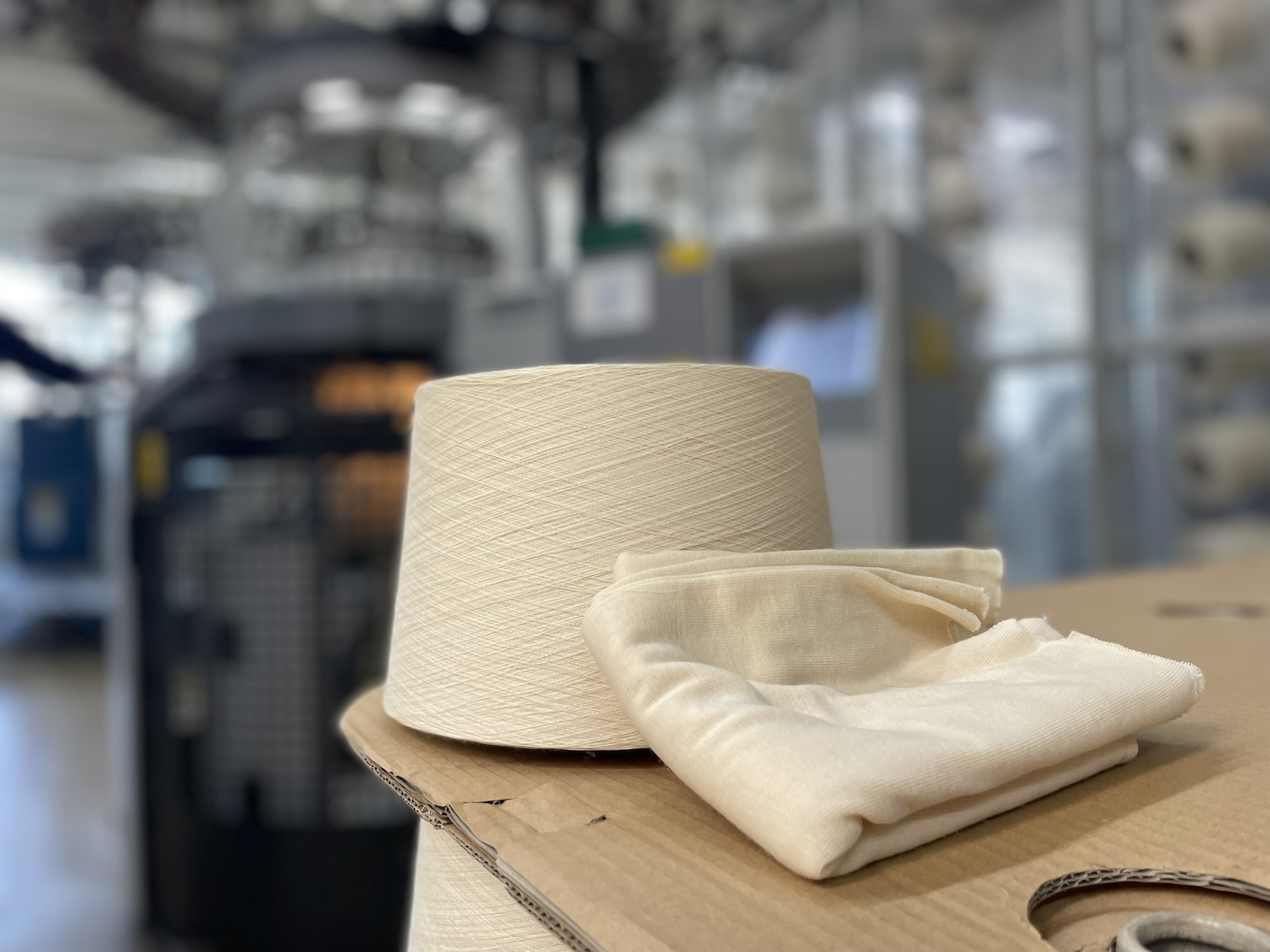
Looking ahead, the partners aim to complete the value chain by integrating garment manufacturing, a necessary step for participation in public tenders. While cotton was chosen as a practical starting point, discussions are already under way to explore additional fibres as the cooperation develops further.
Gebrüder Otto, based in Dietenheim in Upper Swabia, is one of Europe's leading suppliers of textile solutions. Traditionally, the company's focus has been on high-quality cotton yarns and twists, which are produced in its own yarn spinning, twisting and dyeing mill. In addition, Otto offers a continuously growing, customer-
specific portfolio of technical and medical yarns and textiles at its two locations in Balzheim and Dietenheim. Own brands such as Piuma il, recot² and Cotton since 1901 are proof of this claim, as are a large number of awards and certifications. Founded in 1901, Gebrüder Otto is still an owner-managed family business today. With around 160 employees, Otto generated sales of around 30 million euros in 2023

Business intelligence for the fibre, textiles and apparel industries: technologies, innovations, markets, investments, trade policy, sourcing, strategy...
Find out more